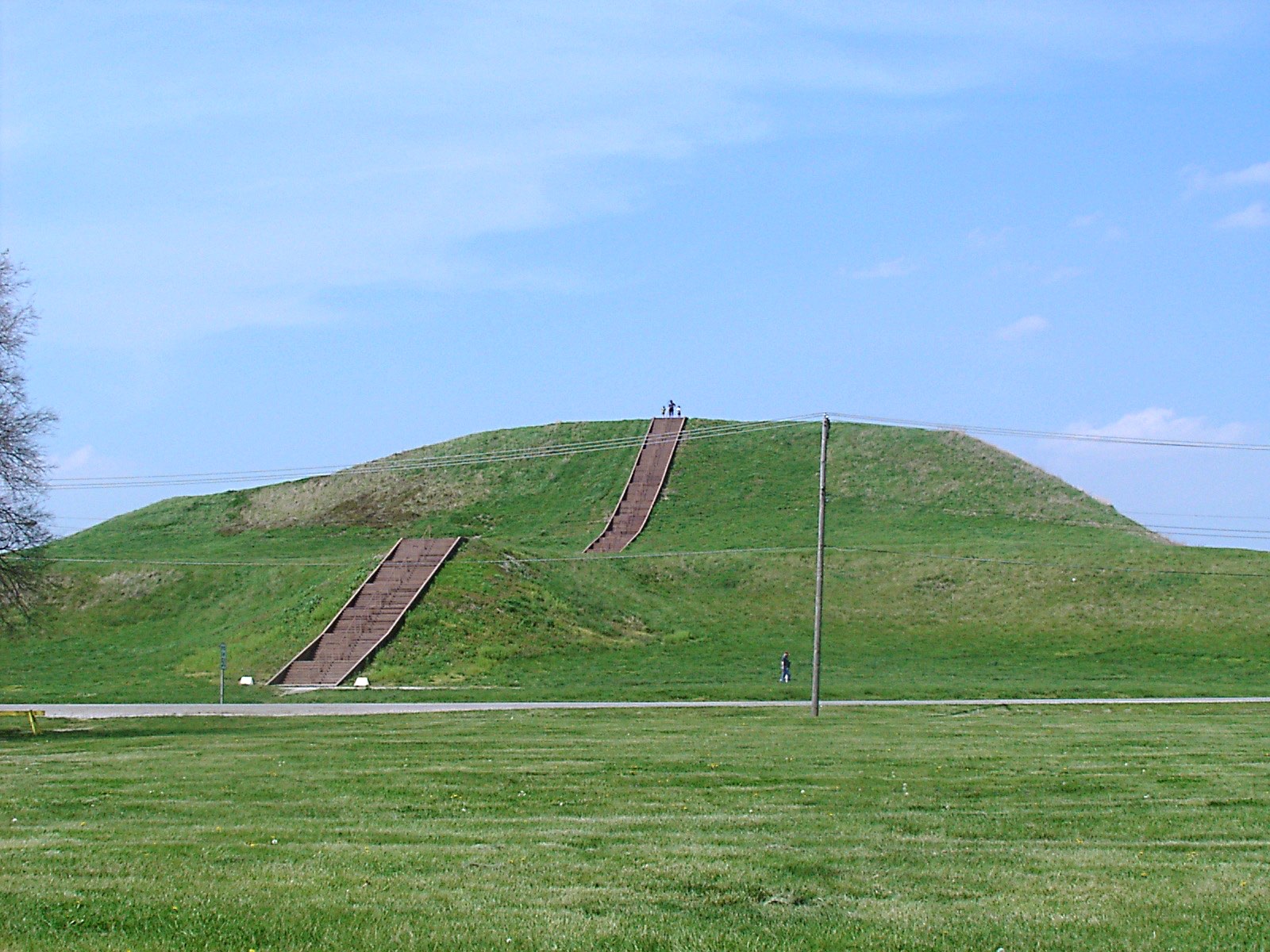
Drive east out of St. Louis on the interstate and, a few minutes after crossing the Mississippi, you pass a great flat-topped hill on the left. Most drivers don't look twice. It's Monks Mound, a terraced earthen pyramid about thirty metres high, built by hand roughly a thousand years ago. It was the centre of the largest city ever built north of Mexico before the arrival of Europeans.
We don't know what its people called it. "Cahokia" comes from a group of the Illinois Confederation who lived nearby centuries later. But we know a great deal about what they built, and that it challenges the old, wrong idea that North America before 1492 was an empty wilderness.
A sudden city
People had farmed and lived in this stretch of floodplain, nicknamed the American Bottom, for centuries. Then, around 1050 CE, something changed fast. Archaeologists describe a "Big Bang": in a few decades, a scattering of villages was reorganised into a planned city. Houses were rebuilt on a new grid, aligned to the cardinal directions. A huge central plaza was levelled. Mound building took off on a monumental scale.
At its peak in the 1100s, Cahokia and its suburbs probably held somewhere between 10,000 and 20,000 people, a population comparable to London at the same time. Some estimates for the wider region run higher. It was the hub of what archaeologists call the Mississippian culture, whose towns, trade networks and religious ideas spread across much of what is now the American Midwest and South.
Moving mountains by the basketful
Cahokia had around 120 mounds when it was at its largest. Some were platforms for important buildings, some were burial mounds, and some marked boundaries. About seventy survive inside the state historic site today.
Monks Mound dwarfs them all. Its base covers roughly fourteen acres, which makes it the largest prehistoric earthwork in the Americas. Builders carried the soil in baskets, load after load, perhaps tens of millions of loads over a couple of centuries, and they chose and layered different clays carefully so the mound would drain and not slump. On its summit stood a large timber building, probably the home or temple of the city's leaders.
Every grain of Monks Mound was carried there by a person.
Woodhenge: a calendar made of cedar
West of Monks Mound, archaeologists found the post holes of several great circles of red cedar posts. They were nicknamed "Woodhenge" because certain posts line up with the sunrise at the solstices and equinoxes when viewed from a central point. The circles were rebuilt several times. A reconstruction stands on the site, and on the equinox mornings visitors gather to watch the sun rise behind Monks Mound, just as it did a thousand years ago.
Mound 72 and the question of power
The most famous excavation at Cahokia is Mound 72, a small ridge-top mound dug in the late 1960s and early 70s. It held hundreds of burials, including a central burial on a bed of thousands of marine shell beads, and groups of people who appear to have been sacrificed. For decades this was read as the grave of a single powerful man and his retainers. A 2016 reanalysis found that the central burial actually included both women and men, which has made researchers rethink how gender and power worked at Cahokia.
What's clear is that Cahokia was not an egalitarian village. It had leaders, rituals of great drama, and the ability to organise thousands of people for public works.
Daily life: corn, chunkey and a crowded city
Cahokia was fed by farms growing maize, squash and native seed crops, plus fish and game from the rivers and backwaters. Its people played chunkey, a game in which a polished stone disc was rolled across the ground and players threw spears to land closest to where it stopped. Chunkey stones are found all over the Mississippian world, and the game may have been a big public spectacle, with gambling and crowds.
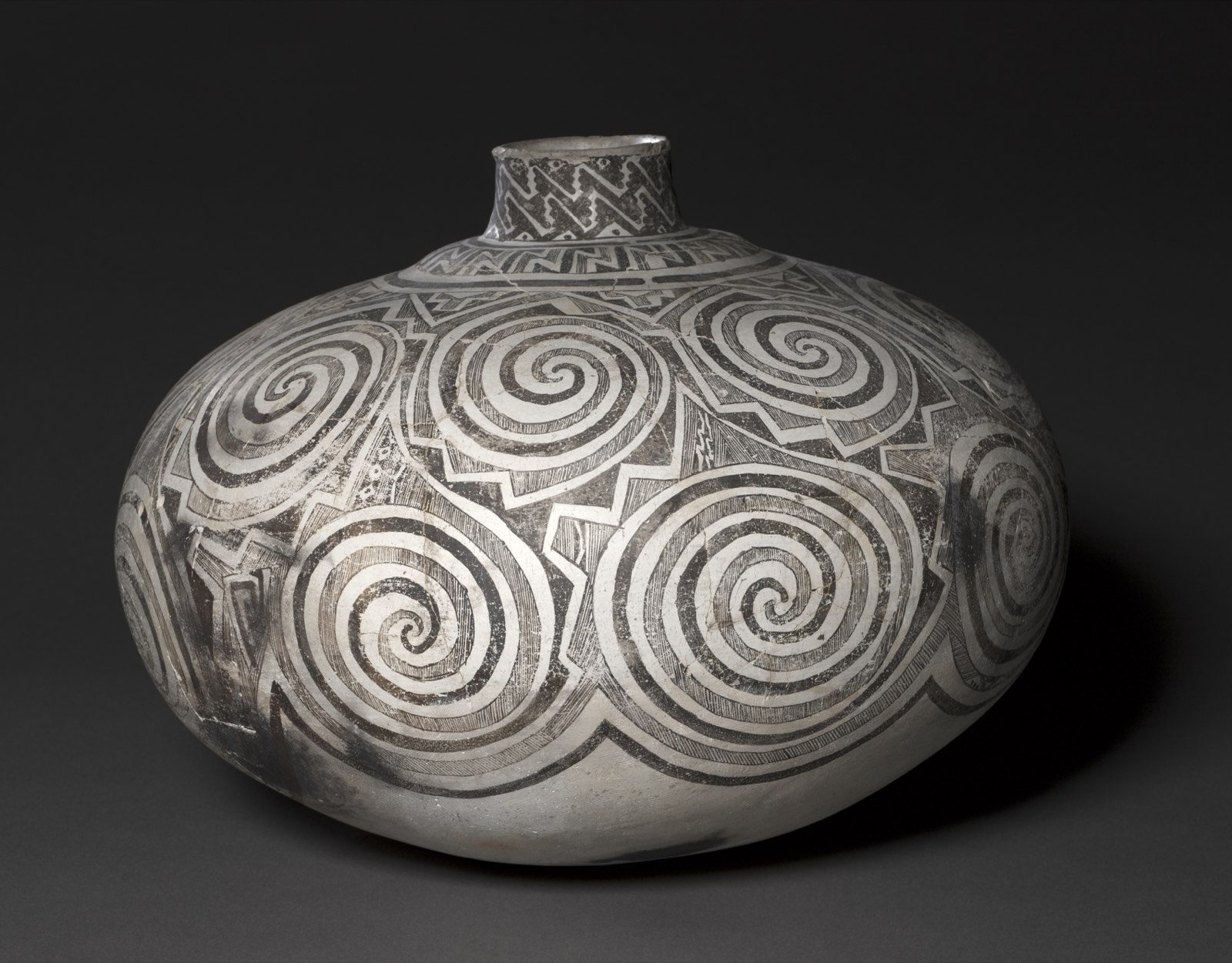
Craft workers made copper plates, shell ornaments and fine pottery. Trade goods arrived from far away: shells from the Gulf of Mexico, copper from the Great Lakes, mica from the Appalachians.
Why did Cahokia empty?
By around 1350, the city was largely abandoned. Why is still debated, and the honest answer is probably "many reasons":
- Climate: shifts in rainfall may have caused droughts and floods that stressed farming.
- Environment: heavy wood cutting was once blamed for erosion and flooding, though a 2021 soil study found little evidence for that theory.
- Politics: a large palisade wall was built around the central precinct in the 1100s and rebuilt several times, suggesting conflict or insecurity.
- Social change: people may simply have moved away to smaller towns as the city's leadership and religious system lost its pull.
It's important not to describe this as a mysterious "disappearance." The people of Cahokia did not vanish. Their descendants are among the Native nations of the Midwest and South today.
Visiting
Cahokia Mounds State Historic Site, run by the state of Illinois, has an excellent interpretive centre and a staircase up Monks Mound. From the top on a clear day you can see the Gateway Arch in St. Louis, two monuments to two very different American cities, a few miles and nine centuries apart.