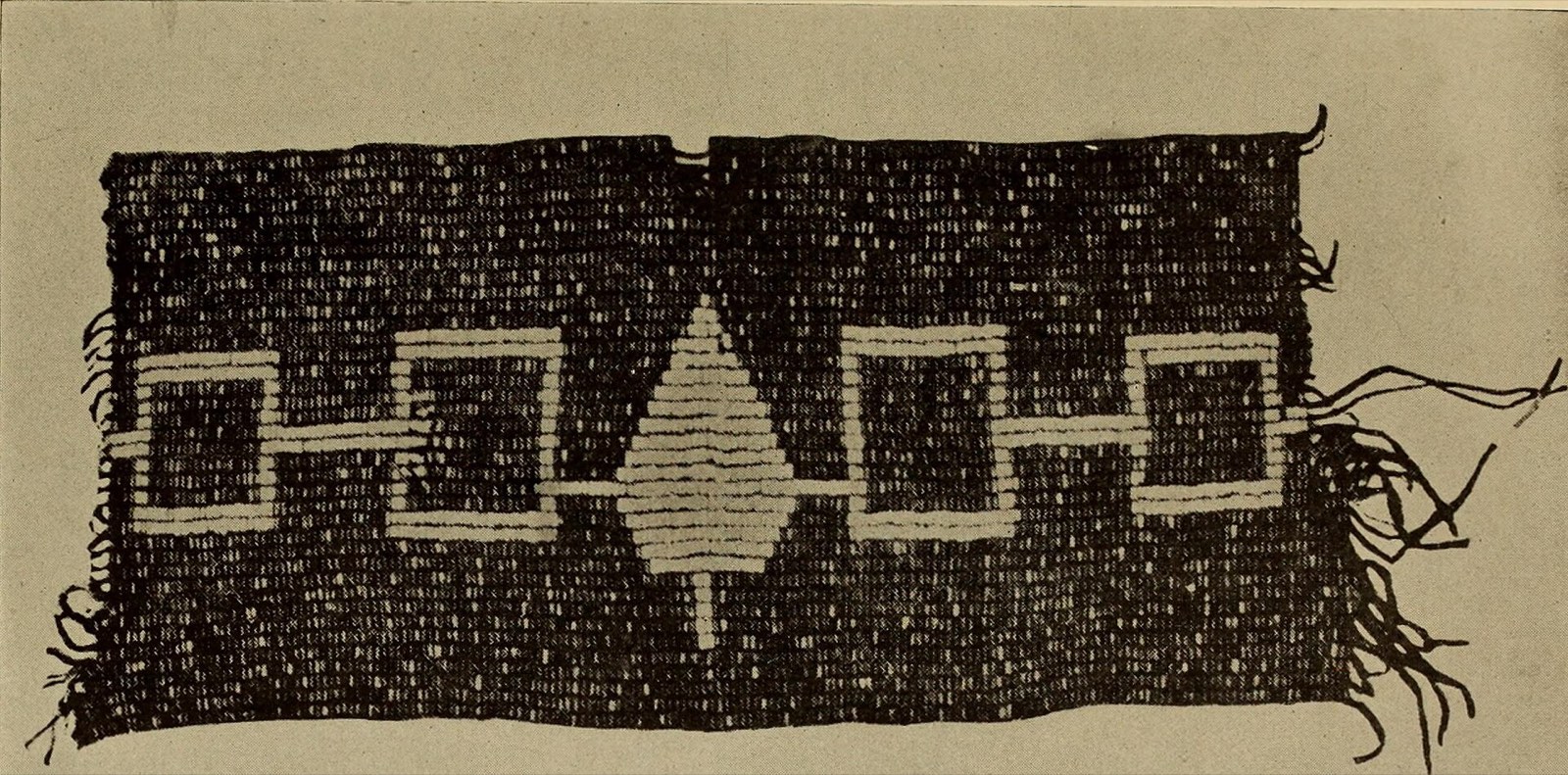
Before there was a New York State, there was a confederacy of nations stretching across the region from the Hudson Valley to the Genesee River, with a constitution of its own, a council of representatives and a symbol of unity that still flies on its flag. The people call themselves the Haudenosaunee, "People of the Longhouse." Europeans called them the Iroquois. Their story is one of the most important in American history, and one of the least taught.
A time of blood feuds
Haudenosaunee oral tradition describes a dark time when the five nations of the region (Mohawk, Oneida, Onondaga, Cayuga and Seneca) were locked in cycles of revenge killing. Grief led to war, and war led to more grief.
Into this world came a man known as the Peacemaker. In many tellings he was born among the Huron (Wendat) people north of Lake Ontario and crossed the lake in a canoe of white stone. He carried a message: that peace, righteousness and power should unite the nations under one law.
His first great ally was Hiawatha (Ayenwatha), an Onondaga or Mohawk man whose daughters had died. Mad with grief, Hiawatha wandered and strung shells on cords as a way of mourning. The Peacemaker found him and used the strings of shell to console him, wiping his tears, clearing his ears and throat so he could hear and speak again. That ceremony of condolence became central to Haudenosaunee law. A woman named Jigonhsasee, who fed travellers on the warpath, was among the first to accept the message, and she's honoured as a mother of the confederacy.
Combing the snakes from Tadodaho's hair
The hardest convert was Tadodaho, a feared Onondaga leader described as twisted in body and mind, with snakes in his hair. Rather than defeat him, the Peacemaker and Hiawatha straightened his mind with words and song and combed the snakes from his hair. Tadodaho accepted the law and was given the honour of keeping the central council fire. To this day, the Onondaga Nation is the Firekeeper, and the title Tadodaho is held by a leading chief.
The founding story isn't about conquering an enemy. It's about healing one.
The Great Law
The constitution of the confederacy is called the Gayanashagowa, the Great Law of Peace. It was passed down orally and recorded with the help of wampum belts. Its key features include:
- A Grand Council of fifty chiefs (hoyaneh) from the five nations, meeting at Onondaga to decide matters affecting the whole confederacy.
- Debate by consensus. Issues pass between groupings of nations, the "elder brothers" and "younger brothers," with the Onondaga acting as moderators, until everyone agrees.
- Clan mothers. Senior women of each clan choose the chiefs, and can remove a chief who fails his duties. Women's political authority impressed, and sometimes shocked, European observers.
- The Tree of Peace. A great white pine was planted, and weapons of war were buried beneath its roots. An eagle sits on top, watching for danger. Its four white roots spread in each direction so other peoples could follow them to shelter.
The Hiawatha Belt
The symbol of the union is the Hiawatha Belt, a wampum belt of purple and white shell beads. It shows four squares connected by a line to a central tree or heart. The squares represent the Mohawk, Oneida, Cayuga and Seneca, and the centre represents the Onondaga, who keep the fire. The design appears today on the Haudenosaunee flag.
When was it founded?
This is genuinely uncertain. Estimates range from the 1100s to the 1500s. One influential argument, made by scholars Barbara Mann and Jerry Fields, links a detail in the founding story, a darkening of the sun, to a solar eclipse visible in the region in 1142. Many other historians and archaeologists favour a date in the fifteenth century. Haudenosaunee people themselves have long described the confederacy as very old. Whatever the date, it was well established when Europeans arrived, which makes it one of the oldest continuously functioning participatory governments in the world.
Did it inspire the US Constitution?
This is where the story gets argued about. Here's what's documented:
- In 1744, at a treaty council in Lancaster, Pennsylvania, the Onondaga speaker Canasatego advised the squabbling British colonies to unite as the Haudenosaunee had done, so they would be stronger.
- Benjamin Franklin printed accounts of these treaty councils. In 1751 he wrote a letter arguing that if the Six Nations could form a durable union, the colonies surely could too, though he phrased it in the prejudiced language of his time.
- In 1754, Franklin proposed the Albany Plan of Union, an early, unsuccessful scheme to unite the colonies, at a meeting attended by Haudenosaunee leaders.
- In 1988, the US Congress passed a resolution acknowledging the contribution of the Iroquois Confederacy to the development of the Constitution.
Some historians argue the influence was real and important. Others say the framers drew mainly on English law, Enlightenment philosophy and classical republics, and that the Haudenosaunee example was at most an inspiration in the background. Both sides agree on one thing: the colonists knew the confederacy well, admired its strength, and had to deal with it as a major power for more than a century.
A living nation
The Haudenosaunee did not disappear into history. The confederacy paid a terrible price during the American Revolution, when it split and its towns were burned, and in the land losses that followed. But the Grand Council still meets at Onondaga, near Syracuse. Haudenosaunee communities live in New York, Wisconsin, Oklahoma, Ontario and Quebec. Their national lacrosse teams compete internationally under their own flag. It's a sport the Haudenosaunee gave the world.