Our office is on Wall Street, and every day we walk past a big bronze statue of George Washington standing on the steps of Federal Hall. Tourists take selfies with him. Office workers eat lunch at his feet. Hardly anyone stops to think that right here, on a balcony on this spot, the first president of the United States took his oath of office. The founding of the republic is usually told as a Philadelphia story. New York played a bigger part than most people remember.
July 1776: a declaration and a toppled king
On July 2, 1776, the Continental Congress in Philadelphia voted for independence from Britain. Two days later it approved the final text of the Declaration of Independence, drafted mainly by Thomas Jefferson. Its claim that "all men are created equal" with "unalienable Rights" was revolutionary, even though the men who signed it denied those rights to enslaved people, to women and to Native nations. That contradiction would shape the next two centuries. See our final chapter.
On July 9, the Declaration was read aloud to George Washington's troops in New York. That evening, a crowd marched to Bowling Green and pulled down the gilded lead statue of King George III on horseback. Much of the lead was reportedly melted down and cast into musket balls. The iron fence around Bowling Green, still there today, dates from before the Revolution, and some say the crowns on its posts were snapped off that night.
A city under occupation
Weeks later, the British arrived with one of the largest fleets ever seen in American waters. Washington's army was defeated at the Battle of Brooklyn in August 1776 and escaped across the East River in fog. The British held New York for the rest of the war. It was a place of prison ships, fires and refugees. They finally left on November 25, 1783, a date New Yorkers celebrated as Evacuation Day for more than a century.
Independence was declared in Philadelphia, but the war for it began in earnest in Brooklyn.
A government that didn't work
The first national government, under the Articles of Confederation, was deliberately weak. Congress couldn't tax, couldn't regulate trade between states and struggled to pay its debts or soldiers. By 1787 many leaders believed the union might fall apart.
In the summer of 1787, delegates met in Philadelphia, behind closed doors and with the windows shut despite the heat. After four months of argument and compromise, including the "Great Compromise" over representation and the deeply troubling compromises over slavery, they signed the new Constitution on September 17, 1787.
The Federalist: a New York newspaper serial
The Constitution needed ratification by the states, and New York was a battleground. Its governor, George Clinton, opposed it. To win public opinion, three men, Alexander Hamilton, James Madison and John Jay, wrote a series of essays under the shared pen name "Publius" and published them in New York newspapers from October 1787. There were 85 in all. Collected as The Federalist, they remain the most famous explanation of how the Constitution is supposed to work, quoted by courts to this day.
New York's ratifying convention met in Poughkeepsie in the summer of 1788. The vote, on July 26, was close: 30 to 27 in favour.
30 April 1789: the balcony on Wall Street
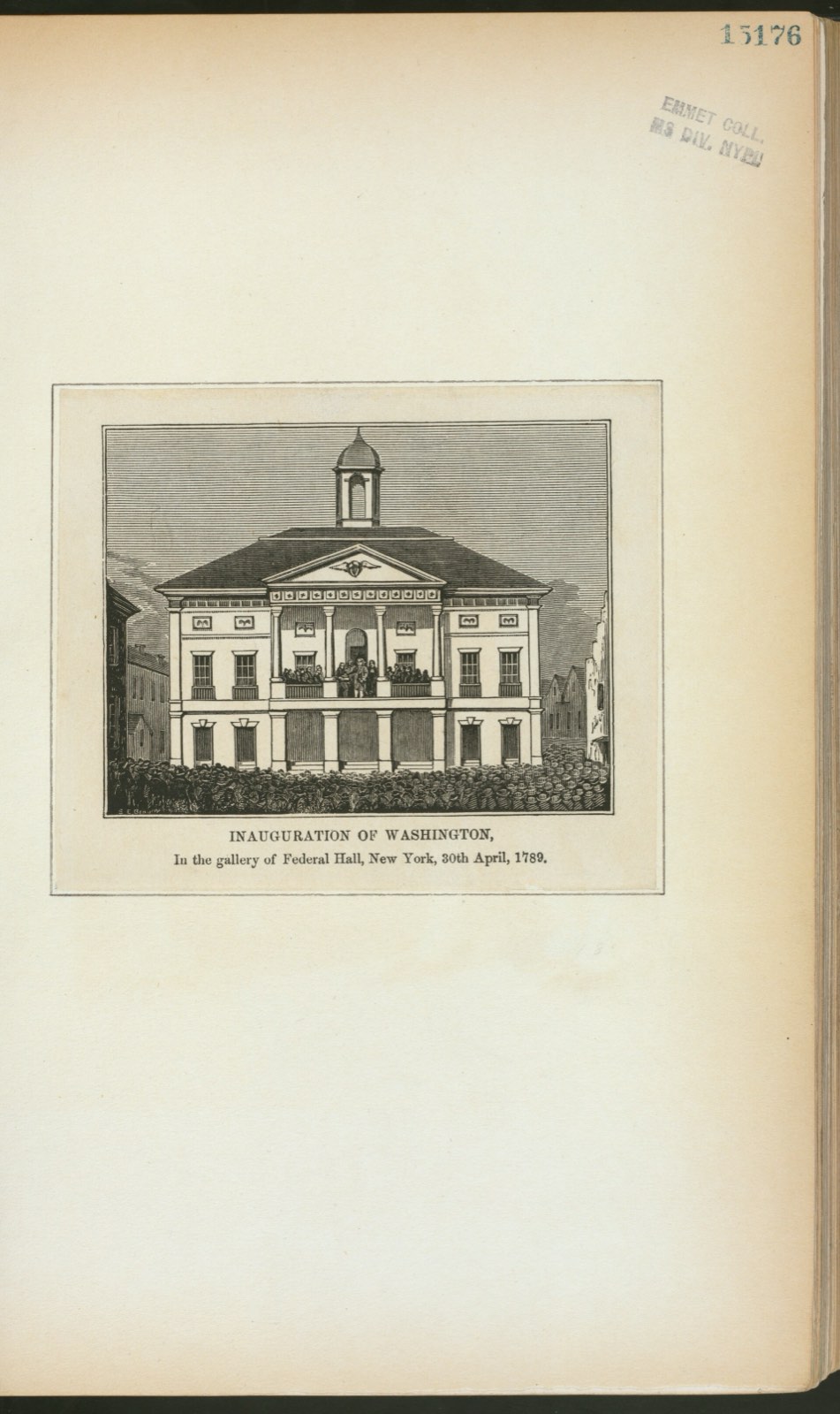
New York became the first capital under the new Constitution. City Hall on Wall Street was remodelled as Federal Hall for the new Congress. On April 30, 1789, George Washington stepped onto its balcony, placed his hand on a Bible borrowed from a nearby Masonic lodge, and took the oath of office before a huge crowd packed into Wall and Broad Streets. Then he went inside and delivered the first inaugural address, visibly nervous, according to those who were there.
The building you see today on the site is not the original. That was demolished in 1812, and the current Greek Revival building, a former Custom House, dates from the 1840s. But the spot is the same, and the Bible used in 1789 still survives.
The Bill of Rights was written here too
Many states had ratified the Constitution only on the understanding that a list of rights would be added. In June 1789, sitting in Federal Hall, James Madison introduced a set of amendments to the House of Representatives. Congress narrowed them down and sent twelve to the states in September 1789. Ten were ratified by December 1791 and became the Bill of Rights, protecting freedom of speech, religion, the press and assembly, the right to a fair trial and more.
In 1790 the capital moved to Philadelphia, and later to the new city of Washington. New York went back to doing what it does best: trading, arguing and growing.
About the painting
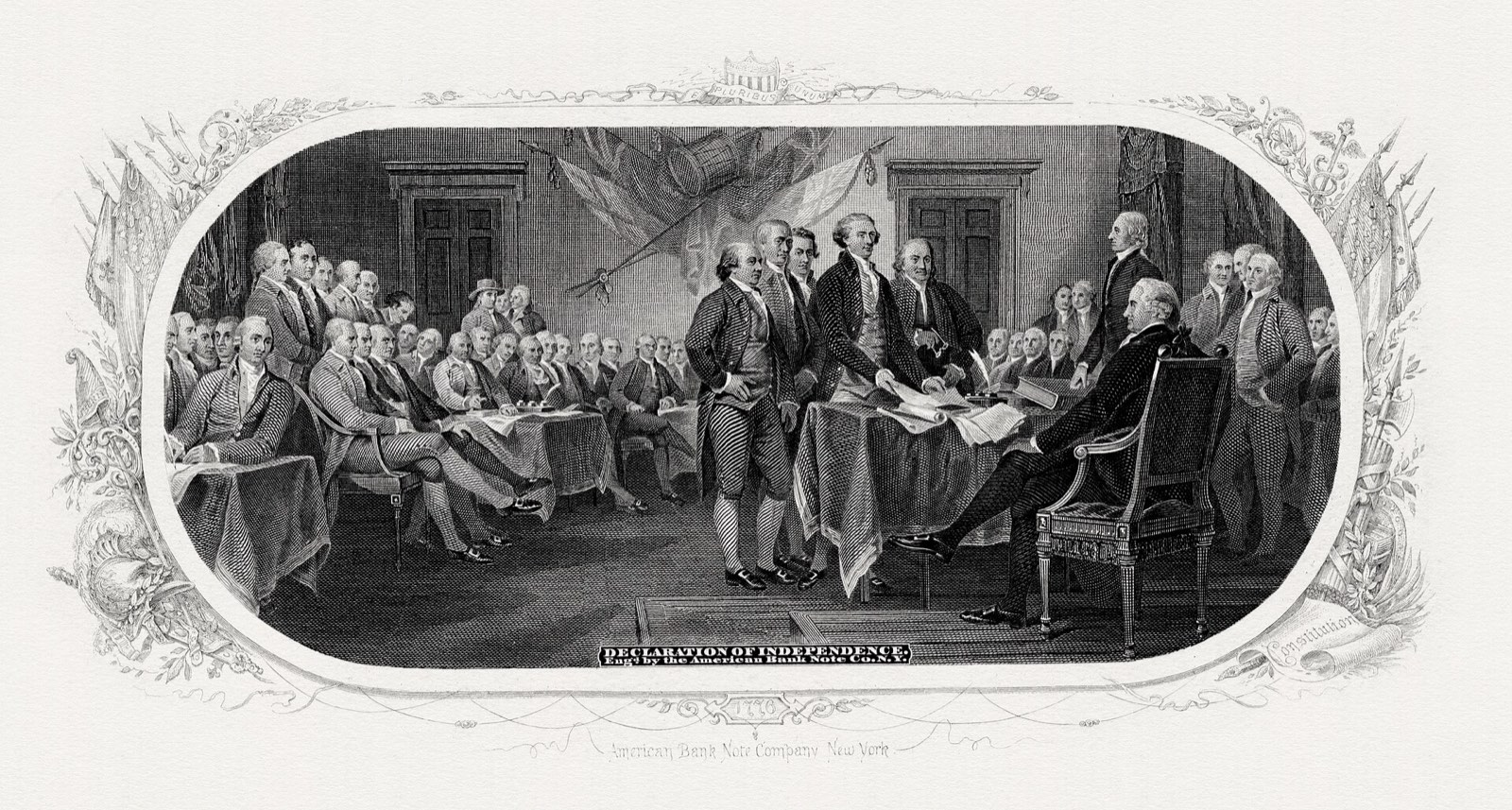
The image at the top of this chapter is based on John Trumbull's famous painting Declaration of Independence, which hangs in the US Capitol Rotunda. It's often described as "the signing," but it actually shows the committee presenting its draft to Congress in June 1776. The signing took place over several weeks, mostly on August 2.