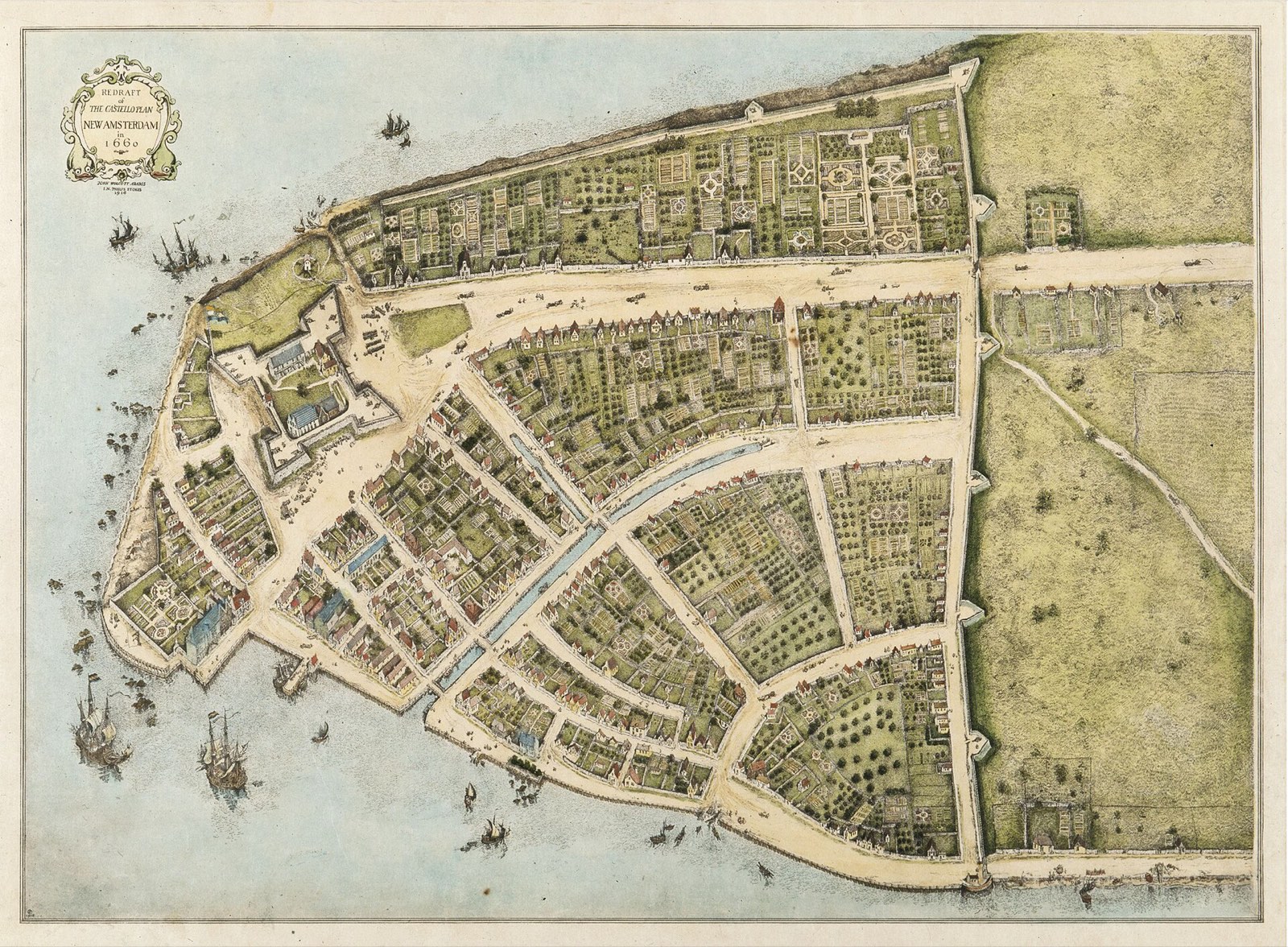
Stand at Bowling Green, at the bottom of Broadway, and try to subtract four centuries. The towers go first, then the streets. Then the shoreline moves: much of lower Manhattan's edge is landfill, so the water comes closer. What's left is a hilly, wooded island, with streams, marshes, oyster beds and a well-worn footpath running north. This was Mannahatta, and that footpath is now Broadway.
Lenapehoking
The island sat inside Lenapehoking, the homeland of the Lenape people, whose territory covered what is now New York City, New Jersey, eastern Pennsylvania and northern Delaware. The Lenape around Manhattan spoke Munsee, an Algonquian language. They lived in villages, moved seasonally to fish, plant and hunt, and used the island for camps and gatherings. "Mannahatta" is often translated as "island of many hills," though linguists debate the exact meaning.
The ecologist Eric Sanderson and colleagues at the Wildlife Conservation Society spent years reconstructing the island's 1609 landscape. They found that it held an extraordinary range of habitats, with dozens of streams and ponds and a richness of plants and animals that would rival a national park today. Their book and maps, Mannahatta, are a fascinating way to see the city with new eyes.
A ship looking for China
In September 1609, the English navigator Henry Hudson, sailing for the Dutch East India Company aboard the Halve Maen (Half Moon), entered the harbour and sailed up the river that now bears his name. He was looking for a passage to Asia. He didn't find one, but his reports of a great river and abundant beaver caught the attention of Dutch merchants.
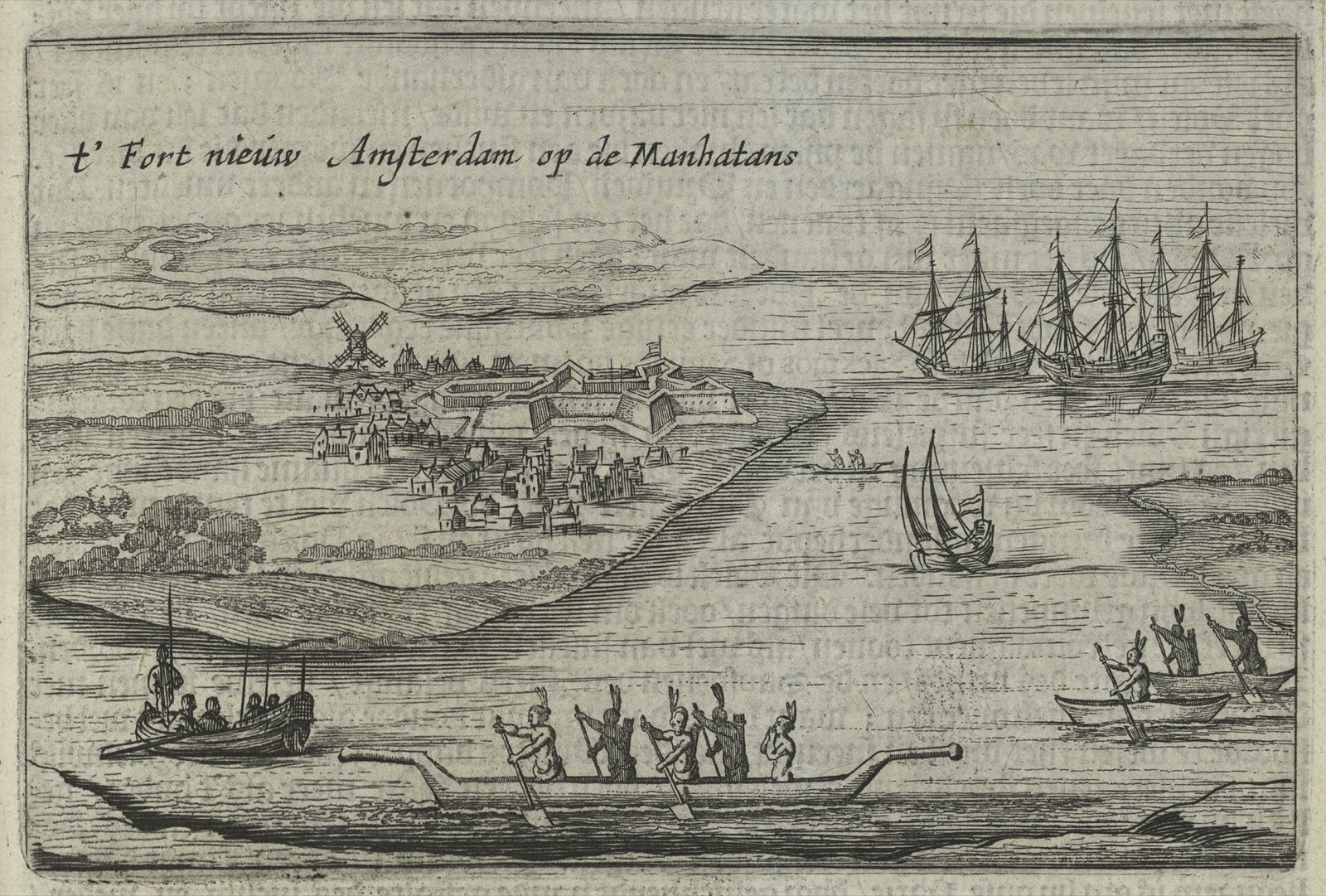
Within a few years, Dutch traders were working the river. In 1621 the new Dutch West India Company received a monopoly on trade in the region, and in 1624 it sent families to settle the colony of New Netherland. By about 1625, a fort and trading post, Fort Amsterdam, was being laid out at the southern tip of Manhattan, roughly where the old Custom House stands today.
The famous "purchase"
Every schoolchild used to learn that Peter Minuit "bought Manhattan for $24 worth of beads." Almost every part of that sentence is misleading.
- The only contemporary evidence is a single letter from a Dutch official, Pieter Schaghen, dated November 1626. It says the island was bought from "the natives" for the value of 60 guilders.
- The "$24" figure is a nineteenth-century conversion, and the "beads" are a later embellishment. The goods were likely things such as cloth, kettles and tools.
- Most importantly, Lenape and Dutch ideas of land were very different. The Lenape likely understood the exchange as an agreement to share use of the land, not a permanent, exclusive sale.
What one side wrote down as a sale, the other side may have understood as an invitation to share.
A messy, diverse little town
New Amsterdam was small (just a few hundred people for its first decades, and around 1,500 by the 1660s) but unusually mixed. Visitors reported hearing many languages in its streets. Settlers included Dutch, Walloons, Germans, Scandinavians, French Huguenots and English. In 1654, twenty-three Jewish refugees arrived from Recife in Brazil, the first Jewish community in what became the United States.
The colony also depended on slavery. The Company brought enslaved Africans to New Amsterdam from 1626, and they built much of the town's infrastructure, including the wall. Some later won a limited "half-freedom" and land north of the town. Their story is an essential part of the city's founding, and the African Burial Ground National Monument in lower Manhattan honours it.
Under Director-General Peter Stuyvesant, who arrived in 1647, the town got order and fortifications. In 1653 a wooden wall was built across the island to protect against attack. The street that ran along it is still called Wall Street.
The Flushing Remonstrance
Stuyvesant was a strict member of the Dutch Reformed Church and tried to suppress other faiths, including Quakers. In December 1657, thirty residents of the town of Vlissingen, now Flushing in Queens, signed a letter refusing to enforce his ban. They argued that love, peace and liberty should extend to Jews, Turks and Egyptians as well as to Christians of every kind. Several signers were punished, but the Flushing Remonstrance is now seen as one of the earliest statements of religious freedom in American history. You can read more in our Primary Sources room.
1664: New Amsterdam becomes New York
In August 1664, English warships arrived in the harbour. Stuyvesant wanted to fight, but the town's leading citizens, outgunned and unwilling to see their homes destroyed, persuaded him to surrender. The English renamed the colony and town New York, after James, Duke of York, the king's brother. The Dutch briefly retook it in 1673–74, but it returned to English rule for good.
The Dutch left more than you might think: place names like Brooklyn (Breuckelen), Harlem (Haarlem) and the Bowery (bouwerij, farm), words like "boss" and "cookie," and perhaps a tradition of commerce and tolerance, however imperfect, that still marks the city.