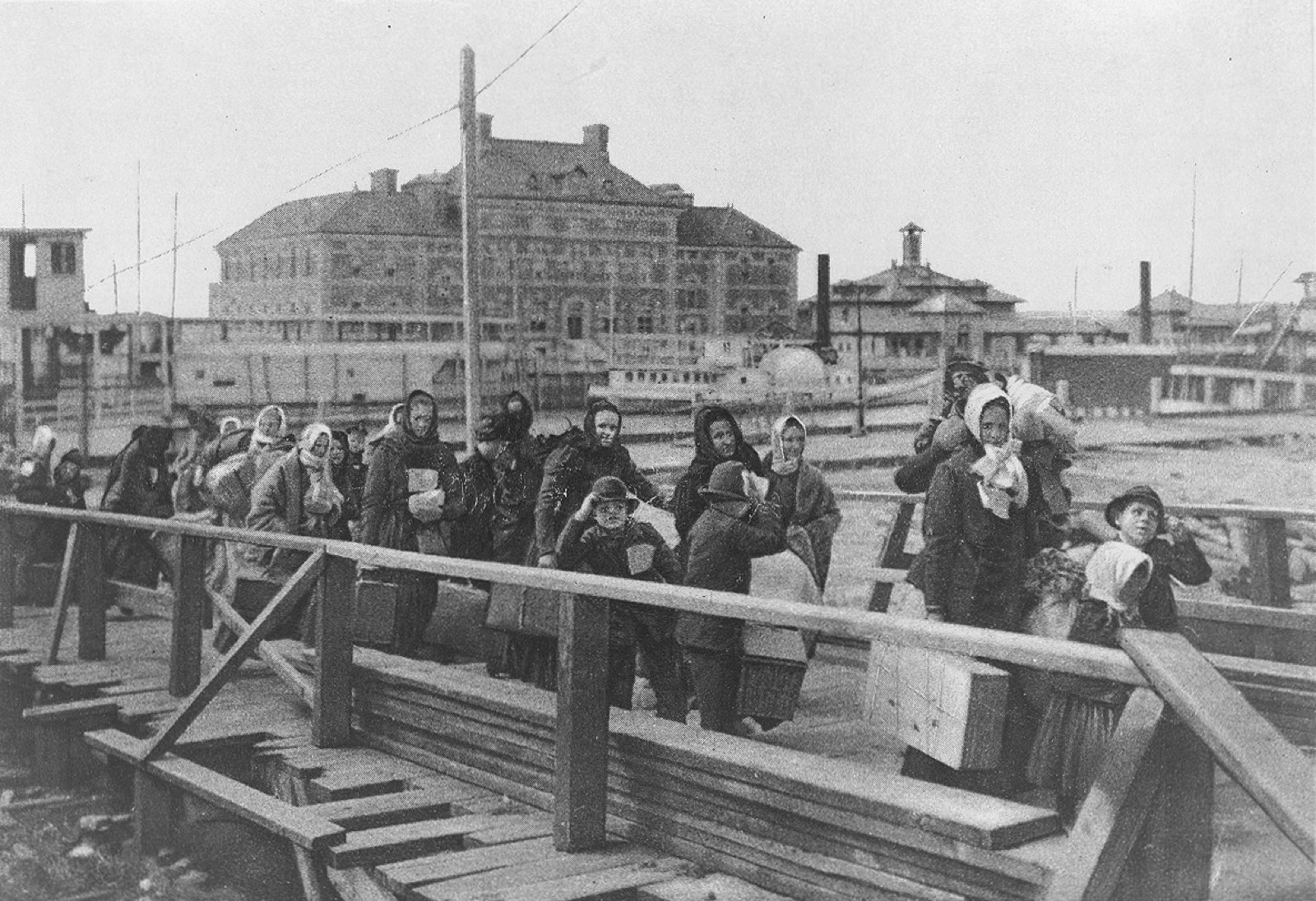
If you take the ferry from Battery Park on a grey morning, there's a moment when the Statue of Liberty slides out of the mist and everyone on deck goes quiet for a second. Then the phones come out. More than a century ago, the people on the decks of incoming steamships had a similar moment, except they'd been at sea for a week or more, often in crowded steerage, and what came next would decide the rest of their lives.
A gift, a sculptor and an engineer
The Statue of Liberty, officially "Liberty Enlightening the World," began as a French idea. The political thinker Édouard de Laboulaye proposed a monument to celebrate American independence and the friendship between the two nations, and to make a point about liberty to France's own rulers. The sculptor Frédéric Auguste Bartholdi designed the figure. Its internal iron framework was engineered by Gustave Eiffel, a few years before he built his famous tower.
France paid for the statue. America was supposed to pay for the pedestal, and fundraising stalled. In 1885 the newspaper publisher Joseph Pulitzer launched a campaign in his paper, the World, promising to print the name of every donor, however small the gift. More than 120,000 people contributed, many of them giving less than a dollar.
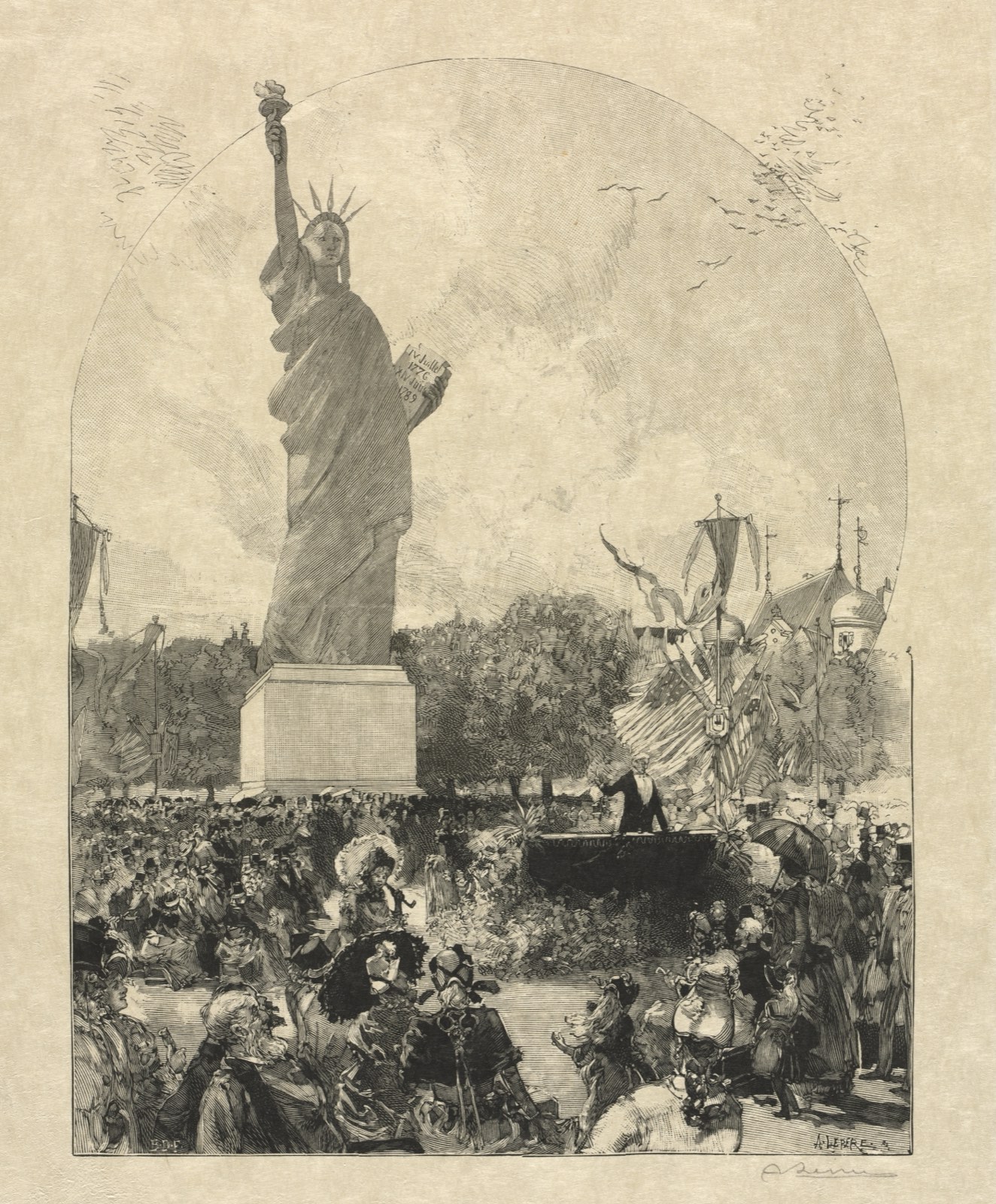
28 October 1886
The statue was dedicated on October 28, 1886, in a ceremony led by President Grover Cleveland. It was a foggy, rainy day. There was a naval parade in the harbour, and in lower Manhattan office workers threw ticker tape from the windows, an event often called the city's first ticker-tape parade. The 140th anniversary of that day fell on October 28, 2026 (see our news).
"The New Colossus"
In 1883, to help raise money for the pedestal, the New York poet Emma Lazarus wrote a sonnet called "The New Colossus." She imagined the statue not as a symbol of French-American friendship, but as a "Mother of Exiles," welcoming the poor and persecuted of the world. Lazarus, from a prosperous New York Jewish family, had been volunteering with Jewish refugees fleeing violence in the Russian Empire. She died in 1887, and her poem was largely forgotten until a friend campaigned to have it placed on a bronze plaque inside the pedestal in 1903. Its most famous line, about the "huddled masses yearning to breathe free," changed what the statue meant.
Lazarus turned a monument to an alliance into a promise to strangers.
Ellis Island opens
Before 1890, immigration through New York was handled by New York State at Castle Garden, at the Battery. As numbers grew, the federal government took over and chose a small island in the harbour, Ellis Island, enlarged with landfill. It opened on January 1, 1892. The first person registered was Annie Moore, a teenager from County Cork, Ireland, who had travelled with her two younger brothers.
In 1897 a fire destroyed the original wooden buildings. A new fireproof main building, the brick-and-limestone hall that still stands, opened in December 1900.
The six-second exam
First- and second-class passengers were usually inspected on board their ships. Steerage passengers were ferried to Ellis Island. They climbed the stairs to the Great Registry Room, unaware that doctors were watching them climb, looking for signs of illness or disability. Inspectors marked anyone suspicious with chalk on their coats: letters stood for conditions such as eye disease, heart trouble or suspected mental illness. A dreaded check used a buttonhook to lift eyelids, looking for trachoma.
Then came the legal inspection: questions about name, origin, destination, money, work and family, checked against the ship's manifest. For most people the whole process took a few hours. About two percent were turned away, most often for disease or because officials believed they would become a "public charge." The island earned the nickname "Island of Tears" for those families.
A popular myth says inspectors changed people's names. In fact, they worked from passenger lists created at the port of departure. Many immigrants did change their names, but usually themselves, later, to fit in.
The peak, and the closing of the door
The busiest years came in the early 1900s. On April 17, 1907, the island processed more than 11,000 people in a single day. The immigrants of this era came especially from Italy, the Russian Empire (many of them Jewish), Austria-Hungary, Germany, Ireland, Greece and Scandinavia, and many stayed in New York, transforming neighbourhoods like the Lower East Side and Little Italy.
The flow was sharply reduced by restrictive laws in the 1920s, especially the Immigration Act of 1924, which set national quotas designed to limit arrivals from southern and eastern Europe and barred most Asian immigration. These quotas weren't fully dismantled until 1965. Ellis Island became mainly a detention and deportation centre and closed in November 1954.
The island today
After decades of decay, the main building was restored and reopened in 1990 as a museum, now the Ellis Island National Museum of Immigration. Tens of millions of Americans have at least one ancestor who passed through its halls, and the passenger records are searchable online. If you visit, stand in the Great Hall for a minute and imagine the noise of a thousand languages under that tiled ceiling.